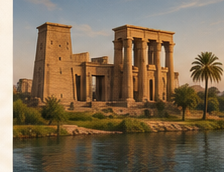
When the first Aswan dam was raised in 1902, Philae began to spend most of each year underwater. Visitors rowed over the courtyards and looked down through green water at the capitals. Photographs from the period show the pylons standing in a lake, which was considered romantic and was, structurally, a slow disaster: the flooding stripped the paint and undercut the foundations.
The High Dam, finished in 1970, would have settled the matter permanently — the temple would have sat between two dams, submerged for good.
Forty thousand blocks
What followed was one of the more audacious rescues in archaeology. A coffer dam was thrown around the island and the water pumped out. The buildings were measured, catalogued, and cut into some forty thousand pieces. Then the whole complex was carried to Agilkia, a granite island three hundred metres away and high enough to stay dry — which was itself reshaped to match the profile of the original island so the temple would sit as it always had.
The work ran from 1972 to 1980. Stand in the first court now and there is almost nothing to give it away, though if you look at the joins on the second pylon in raking light you can pick out the seams.
Go at dusk. The approach is by motorboat, and the temple comes at you from the water the way it was meant to.